
Recombinant Antibody Production Case Study
High-Throughput Recombinant Antibody Production for Biologics Research
Recombinant antibody production is essential in therapeutic antibody development. After antibodies are screened in vivo or in vitro, lead candidates require further optimization and, in some cases, humanization to improve binding affinity, specificity, stability, and overall function. Producing purified recombinant antibodies at sufficient yield and quality is a critical part of this process.
For research and preclinical development, transient antibody expression in mammalian systems such as ExpiCHO™ cells enables rapid, parallel production without the need to generate stable cell lines. This approach supports faster screening, higher throughput, and more efficient biologics development.
This case study highlights how GENEWIZ from Azenta Life Sciences used its integrated gene-to-antibody workflow to help a biopharmaceutical company express more than twenty monoclonal antibodies at milligram scale. By combining optimized DNA construct preparation, transient ExpiCHO expression, BLI-based expression screening, and streamlined Protein A purification, GENEWIZ delivered high purity, low endotoxin antibodies that accelerated the client’s biologics research program.
Why This Matters
- Rapid, scalable CHO-based transient expression
- End-to-end workflow including gene synthesis, cloning, and plasmid prep
- Efficient BLI screening to identify low- or non-expressing constructs
- Reliable milligram-scale antibody yields
- High-quality products with low endotoxin levels and high purity
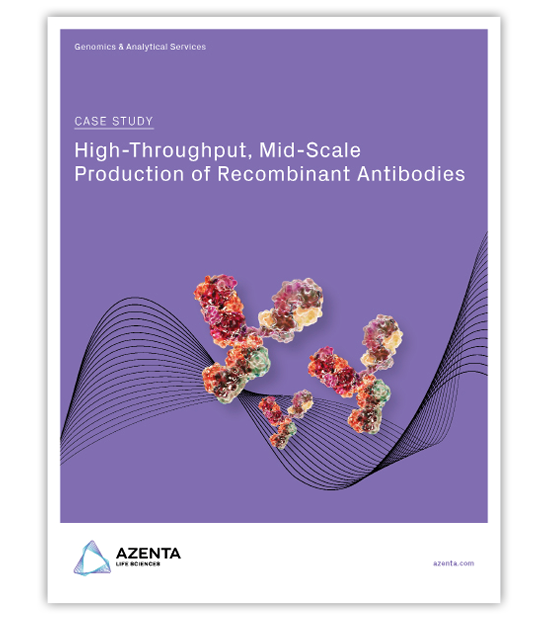
Download Case Study
Related Synthesis Services
End-to-end antibody production, from sequence design and cloning to expression and purification.
Custom antibody DNA synthesis for variable regions, expression cassettes, and construct design.
Precision synthetic DNA libraries for structure–function analysis, optimization, and sequence innovation.